Katja Schmidt · 26 October 2026
Streamlining Complex Form Iterations in Digital Twin Technology for Manufacturing
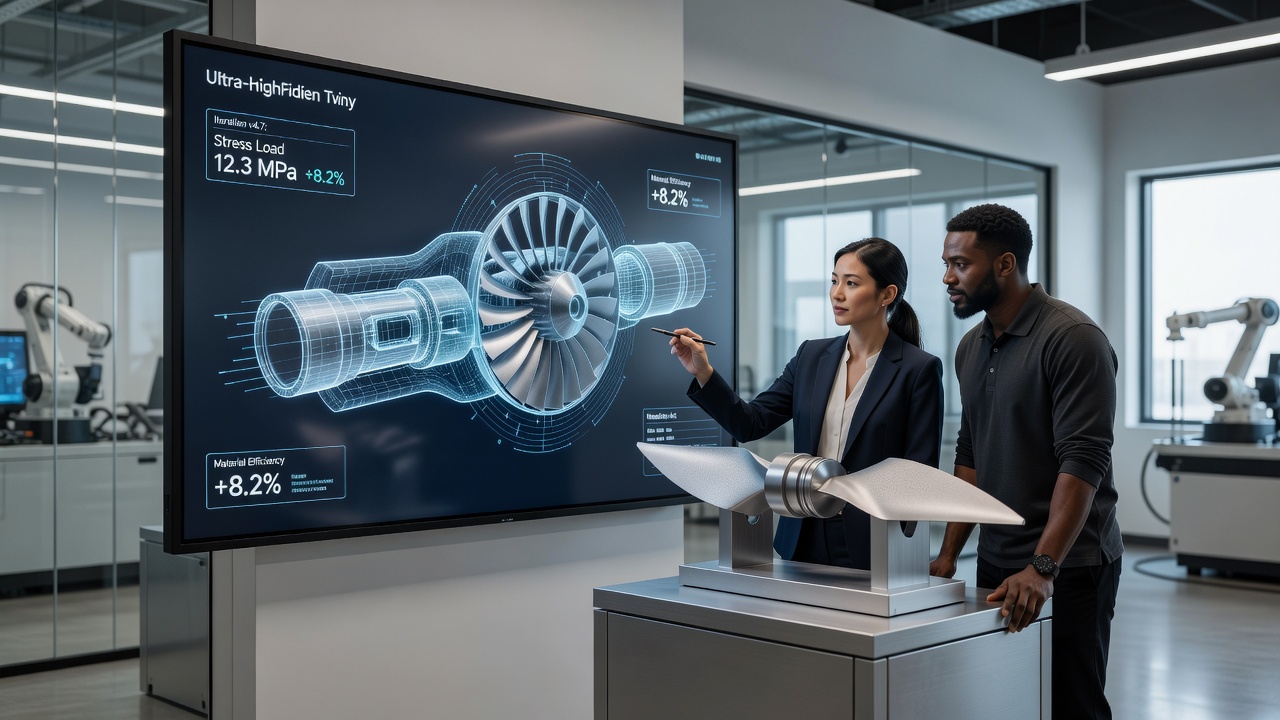
Digital twin technology creates virtual replicas of physical manufacturing assets, and this approach supports detailed tracking of form iterations during product development cycles. Engineers use these models to test variations in shape, material distribution, and structural performance before committing resources to physical prototypes. Data from embedded sensors feeds continuously into the twin, allowing real-time updates that reflect changes in geometry or process parameters while the system runs simulations across multiple design scenarios.
Core Components Driving Iteration Efficiency
Manufacturing teams integrate physics-based simulation engines with machine learning algorithms to handle complex form adjustments, and these tools process large datasets from CAD files, finite element analysis results, and operational telemetry. Parametric modeling software connects directly to the digital twin platform, so modifications to curvature, thickness, or joint locations propagate automatically through the virtual environment. Cloud computing resources scale the computational load during intensive iteration batches, whereas edge devices manage immediate feedback loops on the factory floor.
Integration with Existing Production Systems
Companies link digital twins to enterprise resource planning and manufacturing execution systems through standardized APIs, which reduces manual data transfer steps that previously slowed iteration reviews. Sensor networks on CNC machines and robotic arms supply positional accuracy data that validates simulated form changes against actual output tolerances. Research from institutions such as the National Institute of Standards and Technology shows how these connections improve traceability across design revisions while maintaining compliance with industry standards for dimensional accuracy.
Handling Geometric Complexity in Form Refinement
Complex forms often involve organic curves, lattice structures, and multi-material interfaces that require hundreds of incremental adjustments during optimization. Digital twin platforms apply topology optimization routines that evaluate stress distribution and thermal behavior across thousands of variants in parallel, and this capability shortens the cycle from initial concept to validated geometry. When constraints such as weight limits or load-bearing requirements shift, the system recalculates affected surfaces without requiring full model rebuilds, because modular component libraries store reusable parameter sets.
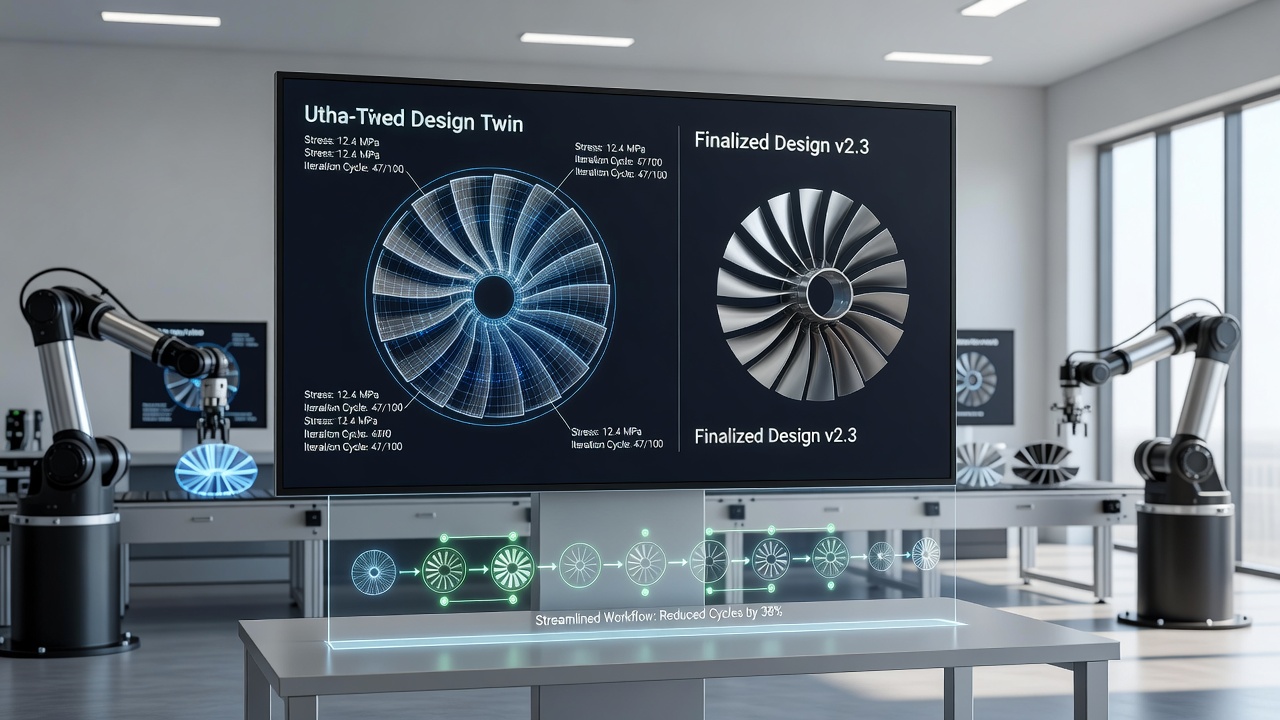
One aerospace supplier applied these methods to turbine blade redesigns and recorded a reduction in physical test iterations from twelve down to four over an eighteen-month period, according to project documentation shared at industry forums. The virtual environment allowed simultaneous evaluation of aerodynamic efficiency alongside manufacturing constraints such as casting draft angles and machining accessibility. Observers note that similar patterns appear in automotive and medical device sectors where regulatory documentation demands precise records of every form change.
Data Management and Version Control Practices
Version control systems tailored for digital twins maintain audit trails of form modifications, including timestamps, user inputs, and simulation outcomes, and these records integrate with quality management frameworks required by ISO and ASME guidelines. Machine learning models trained on historical iteration data predict which parameter adjustments will yield measurable performance gains, thereby guiding engineers toward promising directions instead of exhaustive trial sequences. In October 2026 the International Manufacturing Technology Show featured demonstrations of updated twin platforms that incorporate generative design modules capable of producing constraint-compliant form options within minutes rather than hours.
Cross-Regional Implementation Examples
Facilities in the European Union have adopted digital twin frameworks aligned with the Industry 5.0 initiative, which emphasizes human-machine collaboration during iterative design reviews, whereas Canadian automotive plants have focused on integrating twin data with supply chain visibility tools to account for material property variations. Australian research groups have published findings on hybrid twins that combine high-fidelity simulations with reduced-order models, allowing faster iteration cycles on resource-limited hardware setups. These geographic differences highlight how local infrastructure and regulatory environments shape the specific streamlining techniques deployed.
Performance Metrics and Validation Approaches
Key performance indicators for streamlined iterations include cycle time per design variant, convergence rate of optimization algorithms, and correlation between simulated and measured outcomes after physical validation runs. Studies from university engineering departments indicate that correlation coefficients above 0.92 typically signal sufficient model fidelity for production decisions, and teams adjust mesh resolution or material property inputs when deviations exceed acceptable thresholds. Continuous calibration routines compare live sensor streams against twin predictions, triggering alerts when form-related assumptions drift due to tool wear or environmental factors.
Industry organizations such as the Manufacturing Technology Centre have documented case studies where digital twin deployment reduced material scrap rates during form development by 18 to 25 percent across multiple product lines. The same reports note improved collaboration between design and production teams because shared virtual models eliminate ambiguity about which geometric features remain under active iteration.
Conclusion
Streamlining complex form iterations through digital twin technology relies on tight coupling between simulation engines, sensor networks, and version-controlled data architectures. As manufacturing environments continue to adopt these integrated platforms, the ability to evaluate and refine geometric options accelerates while maintaining traceability and compliance standards. Ongoing developments through 2026 and beyond will likely expand the range of form complexities that can be addressed efficiently within a single virtual environment.